Handling That Stays Predictable on Any Road
Suspension and Steering Repair in Roscoe for worn parts, rough ride, and uneven vehicle control
Worn suspension components and steering linkage cause vehicles to wander on the highway, bounce excessively over bumps, or handle unpredictably when changing lanes. Suspension and steering repair addresses these issues for trucks, passenger vehicles, and work-related equipment driven across rough roads and paved highways around Roscoe. Holmes Shop diagnoses vibrations, uneven tire wear, loose steering response, and ride quality problems caused by failed shocks, worn ball joints, damaged tie rods, and deteriorated bushings that no longer dampen movement or maintain alignment.
This service identifies which suspension or steering parts are causing poor handling by inspecting for play in joints, testing shock absorber damping, checking spring sag, and measuring tie rod end wear. Vehicles used on gravel roads or for hauling develop suspension wear faster than daily drivers because repeated impacts and weight stress components beyond what normal driving produces.
Request a suspension and steering evaluation to determine what's worn and what needs replacement to restore stable handling.
What Suspension Failure Looks Like and How Repair Fixes It
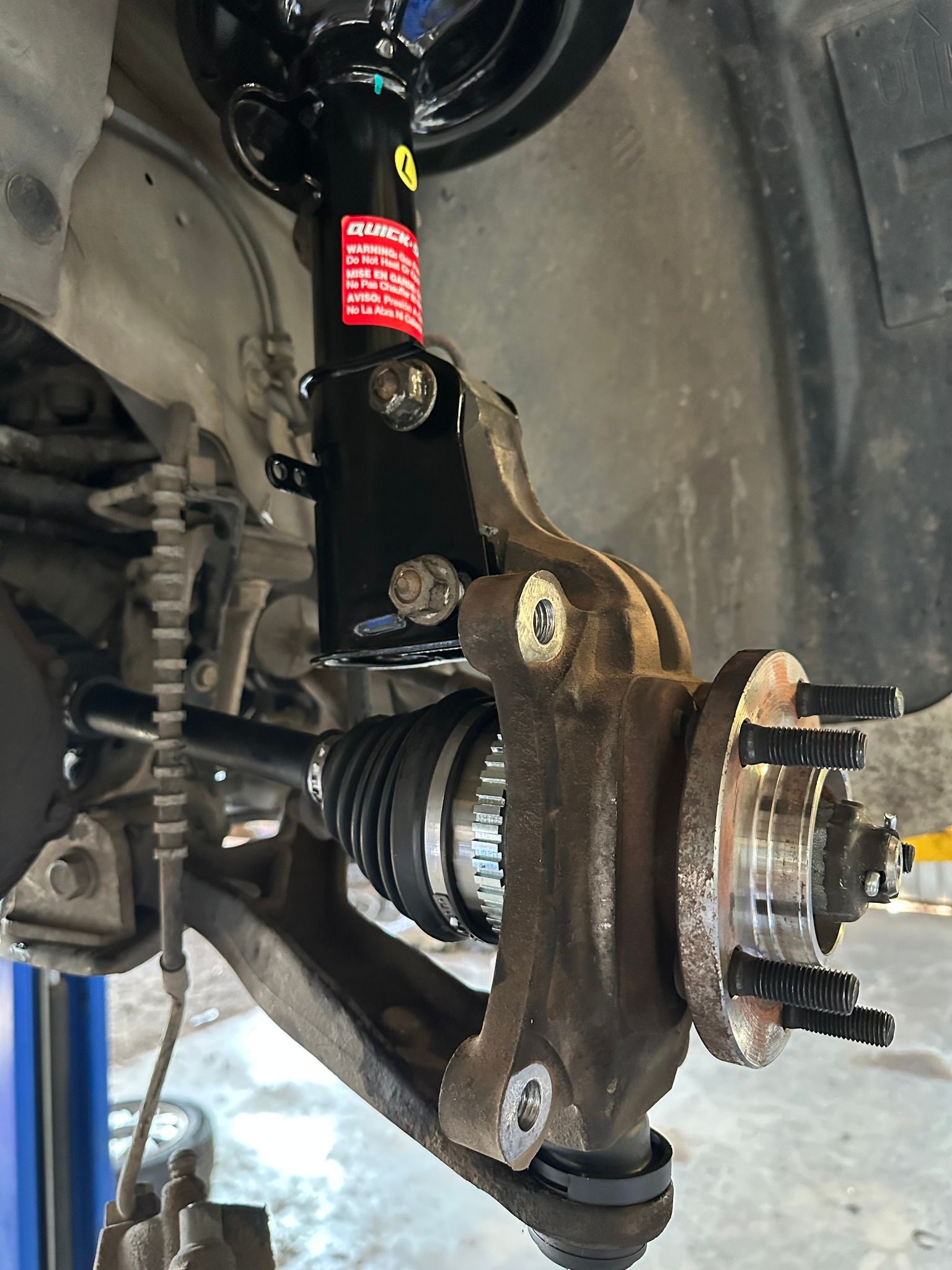
Suspension wear shows up as clunking sounds over bumps, excessive body roll in turns, or a nose-dive feeling when braking hard. Steering wander and vibration indicate worn tie rod ends or loose control arm bushings that allow wheels to move independently instead of tracking straight. Repair involves replacing failed shocks or struts, installing new ball joints, tie rod ends, and control arm bushings, then performing alignment to reset wheel angles so tires contact the road evenly.
After suspension and steering work is finished, you'll notice tighter steering response without play in the wheel, stable tracking on highways without constant correction, and controlled body movement over uneven surfaces instead of bouncing or swaying. The vehicle handles predictably in turns and maintains tire contact during braking, which shortens stopping distances and prevents skidding on loose surfaces.
Heavy-duty trucks and work vehicles require stronger springs, gas-charged shocks, and reinforced bushings rated for load capacity, so replacement parts match the vehicle's use and weight. Alignment after component replacement prevents premature tire wear and ensures steering geometry stays within specifications for safe handling under varying road conditions.
Common Questions About Suspension and Steering Work
Suspension and steering problems affect how a vehicle drives daily, and the following questions cover what owners typically want to know when dealing with handling issues or ride quality concerns.
What causes a vehicle to wander on the highway?
Wandering happens when tie rod ends wear and create play in the steering linkage, or when control arm bushings deteriorate and allow wheels to shift position slightly, so the vehicle drifts instead of tracking straight without constant steering correction.
How do you test if shocks are worn out?
Worn shocks allow excessive bouncing after hitting bumps, and the bounce test involves pushing down on each corner of the vehicle and watching how many times it oscillates before settling—more than one or two bounces indicates the shock has lost damping ability.
Why do ball joints fail on trucks used for work?
Ball joints support vehicle weight and absorb impact forces, and trucks driven on rough roads or loaded heavily stress the joint beyond normal wear rates, causing the socket to loosen and the stud to develop play that eventually separates if not replaced.
What's the difference between alignment and suspension repair?
Alignment adjusts wheel angles to manufacturer specifications using existing adjustment points, while suspension repair replaces worn or damaged components like ball joints, bushings, and tie rods that prevent proper alignment until they're fixed.
How does driving on gravel roads in West Texas affect suspension life?
Gravel and uneven surfaces create constant impact loads that compress and rebound suspension components thousands of times more than smooth pavement, accelerating wear on shocks, bushings, and joints designed for highway use but subjected to off-road stress patterns.
Holmes Shop approaches suspension and steering repairs with attention to real-world vehicle use, applying experience from maintaining equipment operated in demanding conditions. Schedule a suspension inspection to identify worn parts and restore safe, predictable handling.