Warning Lights That Need Real Answers
Check Engine Light diagnostics in Roscoe for vehicles displaying dashboard warning indicators
A check engine light illuminates on the dashboard and stays lit through multiple drive cycles. This warning indicates that the vehicle's onboard computer has detected a problem with the emissions system, fuel delivery, ignition components, or sensor network, but the light itself doesn't explain which part failed or how urgently it needs attention. Holmes Shop performs diagnostic testing in Roscoe to retrieve trouble codes, test the components involved, and determine whether the issue affects drivability, emissions compliance, or long-term engine health.
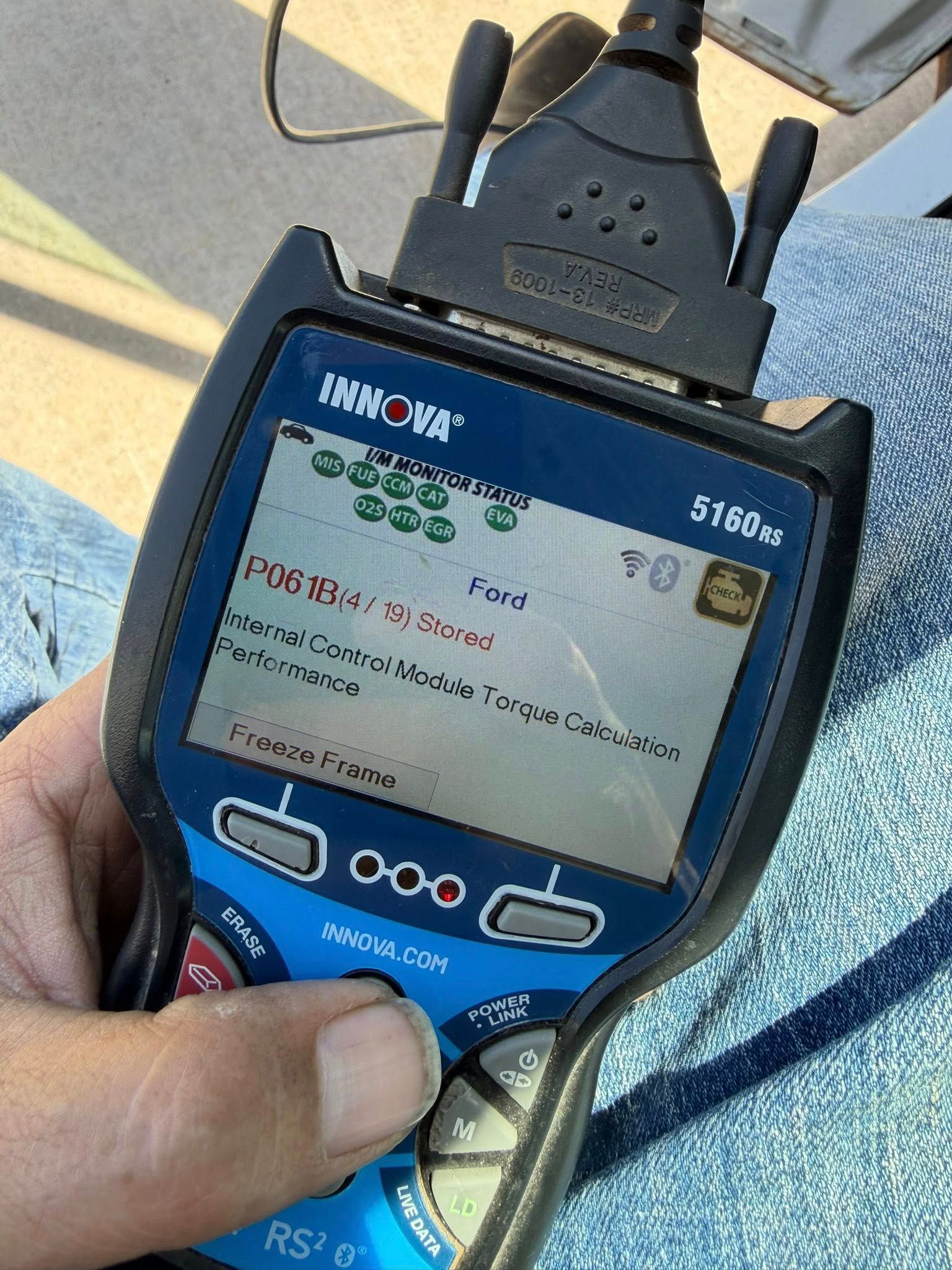
Check engine light diagnostics involve connecting a scan tool to the vehicle's computer, reading stored fault codes, and testing the sensors or systems flagged by those codes. A code indicating a misfire might be caused by worn spark plugs, a failing ignition coil, a clogged fuel injector, or low compression in one cylinder, and each root cause requires different testing to confirm.
Request a check engine light inspection to identify the problem before it worsens.
What the Light Actually Tells You
The check engine light triggers when sensor readings fall outside expected ranges or when emissions-related components stop functioning correctly. Testing identifies whether the problem involves oxygen sensors reporting incorrect air-fuel ratios, evaporative emissions system leaks, catalytic converter efficiency loss, or throttle position sensor failures. Holmes Shop has experience working on both gas and diesel vehicles, where diesel systems may trigger the light for issues like exhaust gas recirculation valve failures or diesel particulate filter regeneration problems not found in gasoline engines.
After diagnostics, you'll know which component triggered the light, whether it affects vehicle performance or just emissions reporting, and what happens if the repair is postponed. Addressing the issue early prevents secondary damage—a failing oxygen sensor that isn't replaced can eventually damage the catalytic converter, turning a sensor replacement into a much costlier repair.
The diagnostics apply to passenger vehicles used for daily transportation and work trucks operating under heavier loads. Testing follows the same process regardless of vehicle type, though diesel systems require additional consideration for emissions components specific to compression-ignition engines.
Common Questions About Warning Lights
Warning light diagnostics bring up questions about urgency, what the codes mean, and how the testing process separates minor issues from serious failures.
What causes a check engine light to turn on?
The light activates when the vehicle's computer detects problems with sensors, ignition systems, emissions components, fuel delivery, or anything affecting how the engine runs or controls exhaust output.
How urgent is a check engine light repair?
Urgency depends on what the diagnostic reveals—a loose gas cap triggers the same light as a cylinder misfire, but one is a quick fix while the other indicates engine damage if ignored.
What's the difference between a solid light and a flashing light?
A solid check engine light indicates a problem that needs attention but isn't immediately damaging, while a flashing light signals active misfires that can damage the catalytic converter and require immediate diagnosis.
Why do check engine lights sometimes turn off on their own?
The light may turn off if the problem was temporary or if the fault didn't reoccur for several drive cycles, but the trouble code remains stored in the computer and can be retrieved during diagnostic testing.
Can extreme heat in Roscoe cause false check engine lights?
High ambient temperatures can stress emissions components like oxygen sensors and evaporative emissions systems, sometimes triggering legitimate faults rather than false codes, which is why physical testing confirms what the code indicates.
Holmes Shop handles check engine light diagnostics for gas and diesel vehicles across Roscoe. Schedule an inspection to identify what triggered the warning and address it before the problem expands.