Drivetrain Performance Without Vibration or Noise
Axle and Drivetrain Repair in Roscoe for vibrations, leaks, and handling issues under load
Drivetrain vibrations, clunking when accelerating, or leaks around axle seals indicate wear in components that transfer power from the transmission to the wheels. Holmes Shop handles axle and drivetrain repair for passenger vehicles, diesel trucks, and work vehicles in Roscoe, diagnosing problems with axle shafts, CV joints, U-joints, differentials, and driveshafts. The owner's mechanical background includes working on both regular vehicles and heavy-duty applications where drivetrain reliability matters for towing, hauling, and daily transportation across West Texas.
This service identifies what's causing noise, vibration, or handling problems by inspecting U-joint wear, checking CV boot condition, testing differential backlash, and measuring axle runout. Vehicles used for towing or carrying heavy loads stress drivetrain components more than unloaded driving, so inspection focuses on wear patterns specific to how the vehicle operates.
Arrange an axle and drivetrain inspection to pinpoint the source of vibrations or leaks and determine what repair prevents further damage.
What Drivetrain Wear Does and How It Gets Fixed
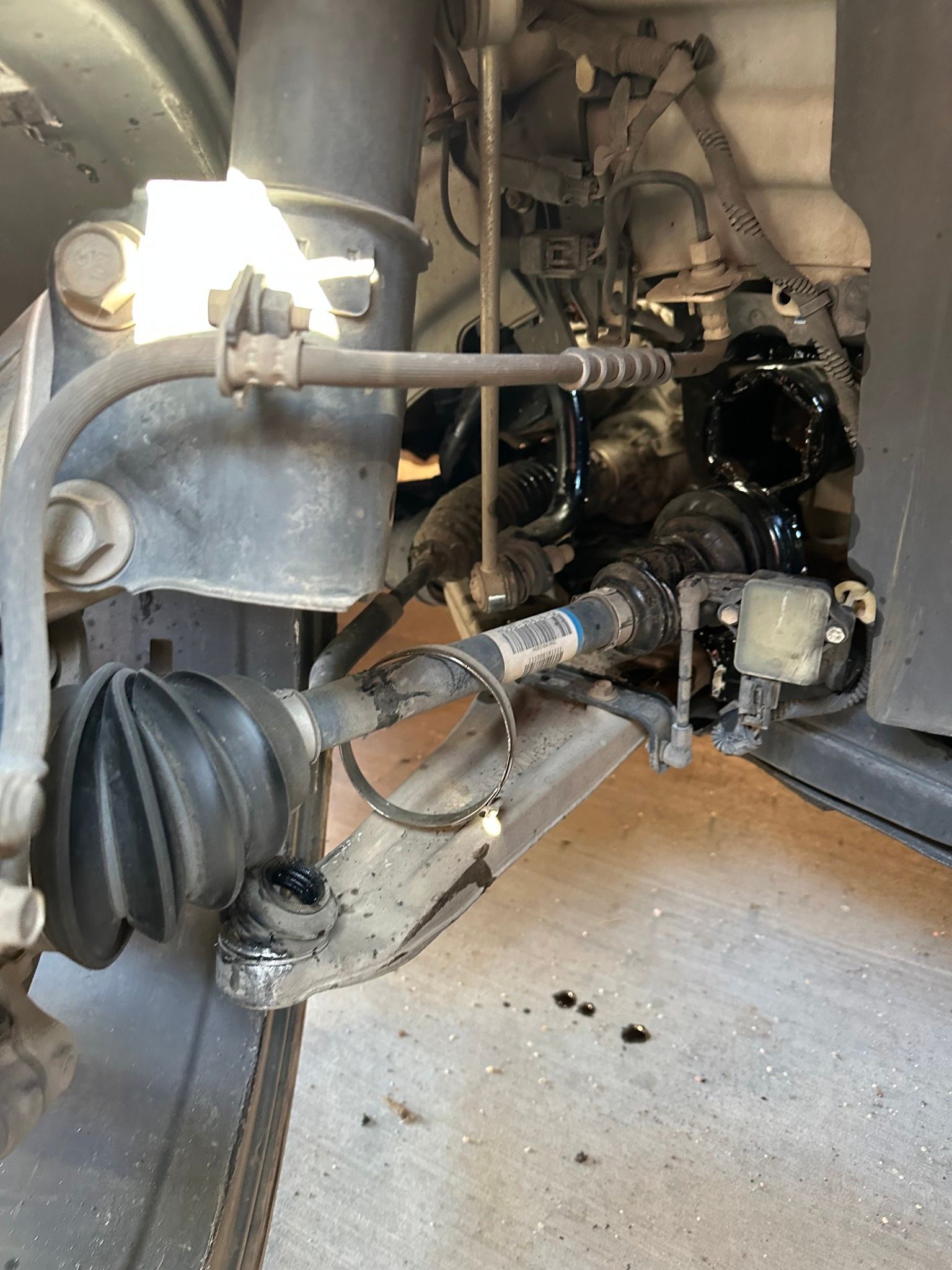
Worn U-joints create a clunking sound during acceleration or deceleration because the caps develop play and allow the driveshaft to move instead of rotating smoothly. Torn CV boots let grease escape and dirt enter the joint, causing the balls and races to pit and eventually bind or click during turns. Differential wear shows up as whining under load or clunking when shifting between drive and reverse, signaling damaged gears or worn bearings inside the housing. Repair involves replacing failed joints, sealing leaking axle seals, rebuilding differentials with new bearings and gear sets, and balancing driveshafts to eliminate vibration.
After drivetrain repair, you'll notice smooth power delivery without vibration at highway speeds, quiet operation without whining or clunking, and responsive acceleration without hesitation or binding. The vehicle tracks straight under power and handles predictably when towing or climbing grades, because worn components no longer introduce play or imbalance into the drivetrain.
Heavy-duty trucks require stronger axle shafts, larger U-joints, and differentials with higher gear ratios and load ratings, so replacement parts match the vehicle's towing capacity and operating conditions. Regular inspection catches early wear before joints fail completely, which can damage surrounding components and leave you stranded.
What Drivers Ask About Axle and Drivetrain Issues
Drivetrain problems often start subtle and worsen quickly, so the questions below address what vehicle owners typically want to know when dealing with unusual sounds or vibrations.
What causes vibration that increases with speed?
Speed-sensitive vibration usually comes from an unbalanced driveshaft, a bent axle shaft, or worn U-joints that allow the driveshaft to wobble instead of rotating true, and the imbalance amplifies as rotational speed increases.
How do you know if a CV joint is failing?
A failing CV joint clicks or pops during tight turns because the worn balls and races bind when the joint articulates at sharp angles, and torn boots often show grease flung onto the inside of the wheel or undercarriage.
Why does a differential whine under acceleration?
Differential whine happens when gear teeth wear unevenly or when bearings lose preload, allowing gears to contact improperly under load and creating noise that changes pitch with throttle input and vehicle speed.
What's involved in rebuilding a differential?
Rebuilding involves draining fluid, disassembling the housing, inspecting gears and bearings for wear, replacing damaged components, setting gear backlash and bearing preload to specifications, then reassembling with fresh fluid and new seals to prevent leaks.
How does towing affect drivetrain life in Roscoe work trucks?
Towing increases torque load on U-joints, CV joints, and differential gears, generating more heat and stress that accelerates wear, so trucks used regularly for hauling need more frequent drivetrain inspections than vehicles driven unloaded on highways.
Holmes Shop uses diagnostic methods developed through maintaining heavy-duty equipment and work vehicles, where drivetrain failures mean costly downtime. Request an axle and drivetrain evaluation to identify worn components and restore dependable performance.